

I could have sworn that, over the 6+ years I’ve been writing Mixing Ingredients, I had developed a strong library of Port content.
I am so wrong. I have developed nothing. That changes today!
Port!
I thought I had written a lot about Port because I actually really like Port and because the Douro Valley is one of the most striking places I’ve ever been (wine country or not). I mean, just look at this place. How can you not like what comes out of this?

Unfortunately, most of the really interesting Port I’ve tasted (both in Portugal and in the States) is either 1) very old (and therefore expensive) or 2) very hard to get here. While those are delicious, and it’s worth paying attention to them, that’s not really what we do here.
So for Mixing Ingredients’ purposes, I’m pretty much limited to one of the big houses. This is pretty much where I landed with Madeira, and just like with Madeira I’m going with the entry-level Sandeman expression.
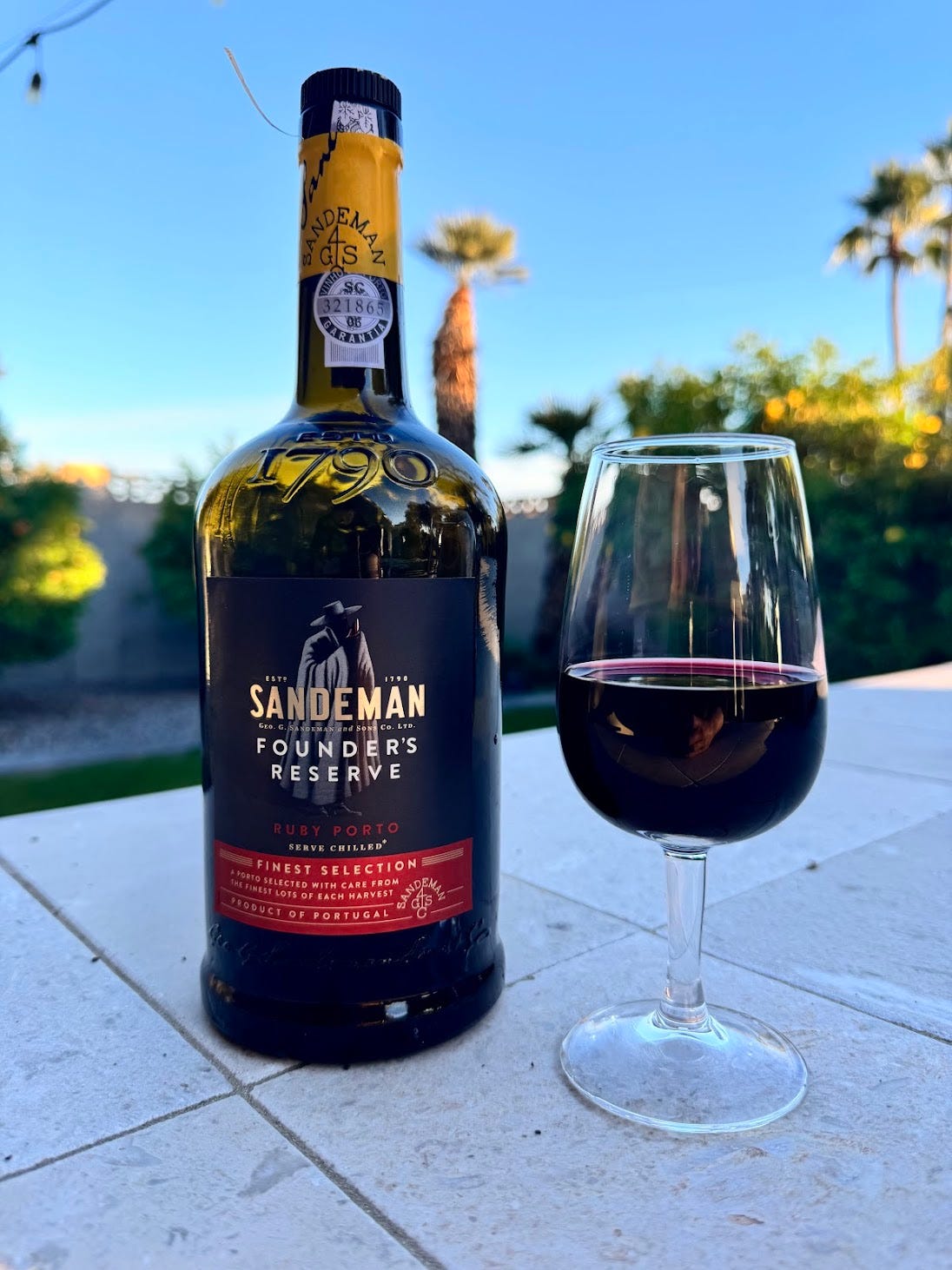
Ruby Port
You may notice as you go through that Sandeman link that Ruby Port is not the preferred classification. Tawny is much more popular, because people associate Port with age and Tawny (usually) has some level of age statement. That age is where you get really deep caramel notes and heavy mouthfeel.
Ruby is aged, but not in wood (so no age statement either) and it doesn’t have any of that. It’s a much purer Port to me, because the flavor you get is all from the grapes, brandy, and sugar. This isn’t a deep dive into how to make Port, but the general idea is that you take a wine, pump up the booze with brandy (only technically brandy in that it’s alcohol from grapes, it hasn’t been aged at all) and sweeten it with sugar. To me, you really taste that true result in Ruby, and then as Port ages really what you start tasting is the wood. That can be delicious! But it’s specific.
I specifically wanted Ruby in this case because the Smoking Bishop calls for adding spice and sugar, and I worried that starting with a Tawny Port could cause some conflict in creating a good drink.
Smoking Bishop
This all brings us back to Smoking Bishop, the only “cocktail” referenced in A Christmas Carol. The “official” recipe from 1845 basically boils down to:
Make a “tea” with holiday spices - cinnamon, cloves, allspice, etc
Cut a citrus fruit, stuff it with spices as well, and get it real charred
Boil a bottle of Port
Mix that all together and serve as a punch with sweetened citrus and nutmeg
The Spice Tea
I went with a cinnamon stick, a star anise pod, a handful of cloves, and some sliced ginger. Once it had been boiling for a while, I strained out the solids and set it aside.
The Citrus
As you may remember, I grow sour oranges in my backyard. I have had a devil of a time ever effectively incorporating them into anything that isn’t cocihnita pibil. But I wanted to give them a try here.
The fruit’s not quite ripe yet, but many are at least mostly orange by now. I skipped the adding of cloves and instead stabbed a few dozen holes in the fruit and threw it on my gas grill that gets insanely hot. After about 7 minutes, it started smelling sweet so I figured that was enough.
The Port
We’ve been over this already. I brought it to a boil in a pan and killed the heat, then brought it out to the grill with the flambeed orange.
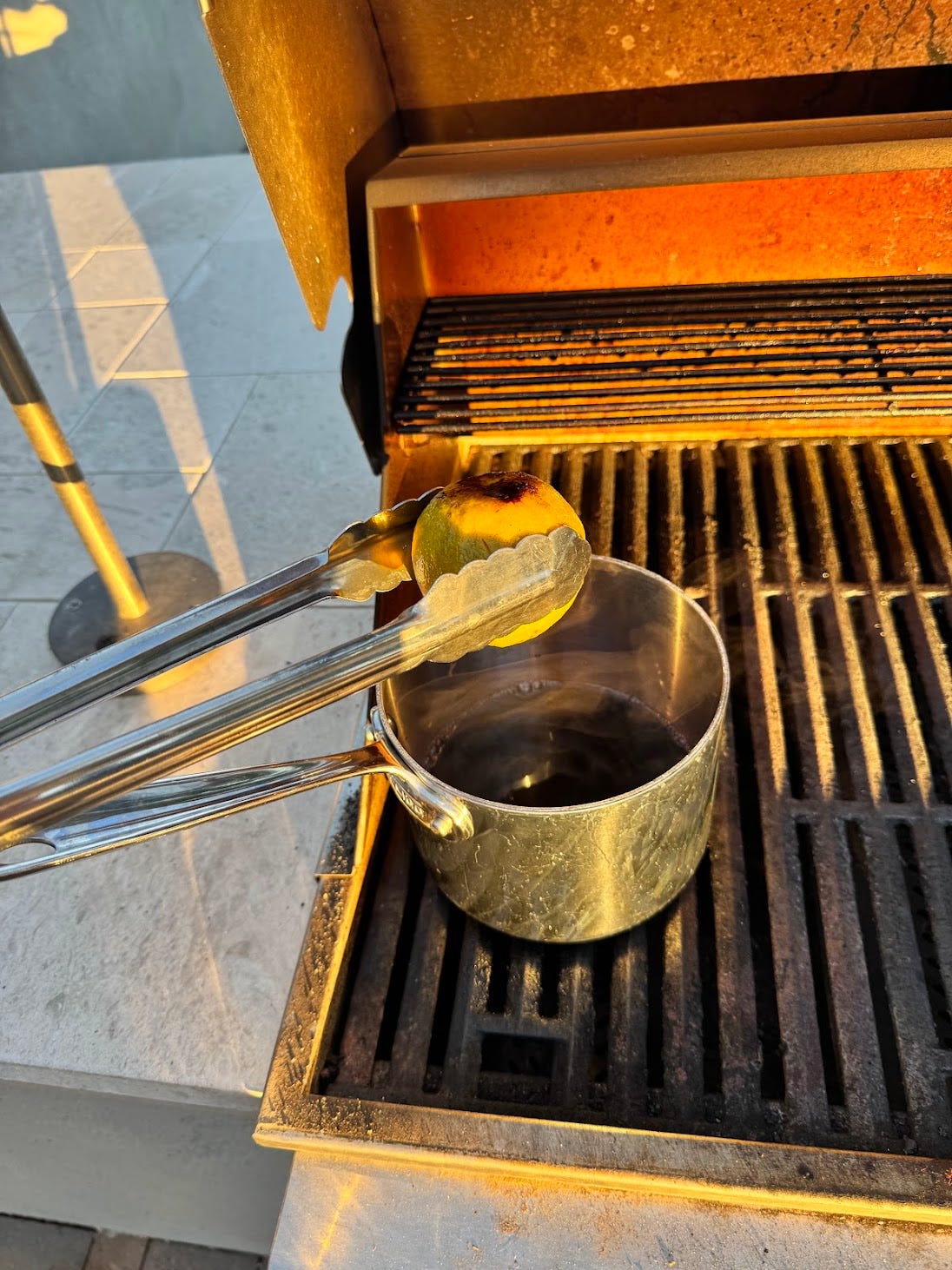
The Finish
I just added all 3 steps together, made sure it all got hot and had some time to meld, and served. No rubbing sugar on a lemon or anything, no fresh grated nutmeg. Basic.
The Verdict
This was WAY better than I was expected when I was taking the easy way out of a recipe written before anyone in my family tree was in the States (maybe? sounds about right).
The mouthfeel starts getting very vintage-Port with the addition of the tea, so I think I made the right call using Ruby. But beyond that, it’s really just a spiced-up, slightly-puckered Port wine that’s nice and warm. If you’ve had Gluwein at a Christmas market, this is a pretty similar vibe.
The biggest difference is that this was a bit punchier from the citrus and much less sweet. I think it was actually a bit too dry, as the spice addition makes it finish almost tannic.
Improvements
Over the next week, I’m going to play around with pumping up the spice profile a bit and dialing in the sweetness level. I’ll be back next week with a final recipe so that everyone has time to make it to enjoy when we start reading the book on the 14th.